Tuesday, May 20, 2014

“Peace I leave with you; my peace I give to you. Not as the world gives do I give it to you." John 14:27

The following is an excerpt from:
Searching for and Maintaining Peace: A Small Treatise on Peace of Heart by Jacques Philippe (Author)

... we understand that the fundamental problem of our spiritual life becomes this: How can I let Jesus act in me? How can I permit the grace of God to freely operate in my life?

That at which we should aim is, then, not principally to impose a lot of things on ourselves, as good as they may seem with our own intelligence, according to our projects, etc.
Rather, we must try to discover the disposition of our soul, the profound attitude of our heart and the spiritual conditions that permit God to act in us. It is only thus that we can bear fruit — fruit that will last (John 15:16).
To the question, “What must we do in order to let the grace of God act freely in our lives?”, there is no unequivocal answer, no master key.
In order to respond to this question completely, it would be necessary to do an entire treatise of the Christian life in which one would speak of prayer (principally of meditation, which is so fundamental in this regard), of the sacraments, of the purification of our hearts, of docility to the Holy Spirit, and so forth, and of all the ways in which the grace of God could further penetrate us.
In this small work, we do not wish to address all these themes. We simply want to concern ourselves with one element of the response to the question posed above.
We chose to speak of it because it is absolutely of fundamental importance.
Furthermore, it is too little known and taken into consideration in day-to-day life for most Christians, even those who are very strong in their faith. 
The essential truth that we wish to present and develop is the following:
To permit the grace of God to act in us and to produce in us (with the cooperation, of course, of our will, our intelligence and our capabilities) all those good works for which God prepared us beforehand, so that we might lead our lives in the performance of good works (Ephesians 2:10), it is of the greatest importance that we strive to acquire and maintain an interior peace, the peace of our hearts.
In order to understand this, we can use an image (without exaggerating, as we should always avoid doing in making comparisons); but one that can be illuminating.
Consider the surface of a lake, above which the sun is shining. If the surface of the lake is peaceful and tranquil, the sun will be reflected in this lake; and the more peaceful the lake, the more perfectly will it be reflected. If, on the contrary, the surface of the lake is agitated, undulating, then the image of the sun can not be reflected in it.
It is a little bit like this with regard to our soul in relationship to God. The more our soul is peaceful and tranquil, the more God is reflected in it, the more His image expresses itself in us, the more His grace acts through us. On the other hand, if our soul is agitated and troubled, the grace of God is able to act only with much greater difficulty. All the good that we can do is a reflection of the Essential Good, which is God. The more our soul is peaceful, balanced and surrendered, the more this Good communicates itself to us and to others through us. The Lord gives strength to His people, the Lord blesses His people with peace, scripture says (Psalm 29:11). God is a God of peace.
He does not speak and does not operate except in peace, not in trouble and agitation.
Let us remember the experience of the prophet Elijah of Horeb: God was not in the hurricane, nor the earthquake, nor in the fire, but in the whisper of a gentle breeze (cf. 1 Kings 19)!
Often, we cause ourselves to become agitated and disturbed by trying to resolve everything by ourselves, when it would be more efficacious to remain peacefully before the gaze of God and to allow Him to act and work in us with His wisdom and power, which are infinitely superior to ours.
For thus says the Lord God, the Holy One of Israel: By waiting and by calm you shall be saved; in quiet and in trust your strength lies, but you would have none of it (Isaiah 30:15).
Our discussion is not, it is well understood, an invitation to laziness and inaction. It is an invitation to act, even to act considerably sometimes, but under the impulse of the Holy Spirit, which is a gentle and peaceful spirit. And not in a spirit of disquietude, agitation or excessive hurry, which is too often the case with us.
Our zeal, even for God, is often badly illuminated.
Saint Vincent de Paul, the last person anyone would ever suspect of being lazy, used to say: “The good that God does is done by God Himself, almost without our being aware of it. It is necessary that we be more inactive than active.”

Saturday, April 5, 2014

No Sidelines

There are no 'sidelines' in life; no having our cake and eating it too; no free rides; we either are coming into focus or we are going out of focus. This is common knowledge and yet, ... we are often coerced to the 'sidelines' denying the interconnectedness of life - the mimetic nature of living in the image and likeness of God.

Call it relativism,
Call it political-correctness,
Call it what it is, the myth that tries to justify making-no-waves.

In our attempts to posture ourselves straddling-the-fence on all of life's decisions that are ours to make, be they small or large, we allow ourselves to be swept off the playing field, relegated to the 'sidelines' where there is no shortage of whimpering and whining.

Léon Bloy (1846-1917), the French novelist, poet, and Catholic convert had a way of seeing through the fog - the myth of straddling the fence. In her column, "Credible Witnesses" in the Magnificat, Heather King shares an excerpt from Bloy's Pilgrim of the Absolute:
"Every man who begets a free act projects his personality into the infinite... If he begets an impure act, he perhaps darkens thousands of hearts whom he does not know, who are mysteriously linked to him, and who need this man to be pure as a traveler dying of thirst needs the Gospel’s draught of water. A charitable act, an impulse of real pity sings for him the divine praises, from the time of Adam to the end of the ages; it cures the sick, consoles those in despair, calms storms, ransoms prisoners, converts the infidel and protects mankind."
To be awaken: to be fully alive as a person made in His image and likeness is taking up our cross, if you will, seeing the choice of our actions, from what life hands us, as a choice, even mysteriously, shared with thousands of hearts not yet known. This sharing is the joy of being human and it is in living fully THIS life that we are all called to participate.

Wednesday, April 2, 2014

If we carry too little silence... Madeleine Delbrêl

"Whoever hears my word"
It is because the Word became flesh that we cannot know him without listening to him. But we can know him even less if we do not try to love him as we listen and try to imitate him with our flesh here where we are living his life; and try to follow his Word where it wants to lead us. And his Word wants to lead us into the depths of the alliance between ourselves and God to where the union of our own will with that of God becomes possible, to where it becomes possible for our acts to be his.

If we carry too little silence, too little recollection, to hold this new form of fruit or to enable us to come to touch the secret of the world, we cannot be alive with the mystery of this alliance. And every form of love on earth is merely an image of this great alliance.

It seems impossible to me to imagine a life lived in accordance with the Gospel that does not include both wanting a life of silence and knowing that such a life is essential.

If we pick out from the beginning of the Gospel to the end all the statements Jesus makes about the "Word" of God - all that he says about the conditions needed for it to be "received" and "listened to"; for it to be "kept," for it to be "done," for it to be "announced"; - we will quickly realize that for the "good news" to be known, lived and communicated it must be welcomed, recollected, and carried in the depth of our being.

And if our whole lives have to be made subject to the Gospel of Jesus Christ, if we desire to make all his words as far as possible our guide in the circumstances of our life, this will only be possible if we make creating silence an integral part of our life.
- Madeleine Delbrêl, The Joy of Believing - from the Magnificat

Saturday, March 8, 2014

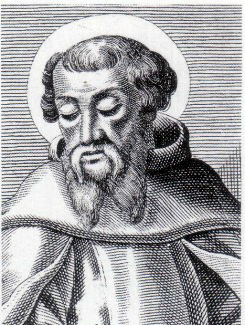
In following the Son of God you are glorified by Him - St Irenaeus

From the treatise Against Heresies by Saint Irenaeus

The Lord did not need our service. He commanded us to follow him, but his was the gift of salvation. To follow the Saviour is to share in salvation; to follow the light is to enjoy the light. Those who are in the light do not illuminate the light but are themselves illuminated and enlightened by the light. They add nothing to the light; rather, they are beneficiaries, for they are enlightened by the light.

This is the glory of man: to persevere and remain in the service of God. For this reason the Lord told his disciples: You did not choose me but I chose you. He meant that his disciples did not glorify him by following him, but in following the Son of God they were glorified by him. As he said: I wish that where I am they also may be, that they may see my glory.

Wednesday, February 26, 2014

Stripping layers and finally, Aslan says, "You will have to let me undress you."

I have always found solace in this reflection.  As we approach Lent let us not take it lightly, but realize that, as Marjorie Thompson wrote: "sin is a deeper orientation of life from which all of us suffer."

A Dragon’s Tale*
by Marjorie Thompson

There was a boy called Eustace Clarence Scrubb, and he almost deserved it. His parents called him Eustace Clarence, and his schoolmasters called him Scrubb. I can’t tell you how his friends spoke to him, for he had none… Eustace Clarence liked animals, especially beetles, if they were dead and pinned on a card…. Deep down he liked bossing and bullying; and though he was a puny little person who couldn’t have stood… in a fight, he knew that there are dozens of ways to give people a bad time…
So begins The Voyage of the Dawn Treader, the third Narnian Chronicle by C. S. Lewis. What follows is a story from that world – a story of lions and dragons, a story of transformation.

To begin with, Eustace Scrubb had no imagination and no patience with his cousins who did. He taunted and pestered them because they childishly believed in a land called Narnia, ruled by a lion named Aslan, whom no one in the world but the four of them had ever seen. Scrubb prided himself on being unsentimental, scientific, and cultured; others might have described him as rude, boring, and haughty. Having been raised on Plumptree’s Vitaminized Nerve Food, Scrubb’s tastes were, in fact, deplorably narrow. It took little to turn his delicate stomach and sheltered eyes. To be quite bald, Eustace was the world’s original “wimp.”  

Imagine, then, the poor lad’s dismay when the “fictitious” land of Narnia suddenly became a living reality, and Scrubb found himself affected by the very Magic he had ridiculed with such disdain! I am sorry to report that when this took place, the boy’s already ungracious character became absolutely unbearable. He made out his cousins, and everyone else in Narnia, to be ogres; he refused to take responsibility for anything in the course of their adventures; he insisted on viewing himself as the only sane individual; and he expected exceptions to be made on his account alone – assuming that he always got the short end of the stick, no matter how civil, even generous, the others were to him. So there you have Eustace Clarence Scrubb, for better or worse – and mostly, I’m afraid, for worse.

As the story progresses, the adventurers’ ship survives a devastating storm and finds harbor on an unknown island. Eustace, unaccustomed to work, creeps off to take his ease while the others set to repairs. He manages to get thoroughly lost and ends up in the valley of a dragon! Now the dragon itself is scarcely a cause for alarm; Eustace comes upon the elderly creature just in time to watch it expire. Then the real adventure begins. A blinding rain drives Scrubb into the dragon’s cave; and there, as his eyes grow accustomed to the dark, Eustace realizes that the sharp objects he is sitting on are not rocks. They are crowns and rings and heavy necklaces – all gold and precious jewels!

Of course, you and I would know right away that a dragon’s cave is filled with treasure; but Eustace had never read the sort of books that tell you these things. Gazing at the sheer magnitude of riches, his eyes grew large and his hands grew itchy and his heart filled with desire. “They don’t have any taxes here,” he astutely observed. But he had no sooner slipped a heavy gold bracelet over his arm when fatigue overtook him. He fell asleep on the treasure heap, and when he awoke, he discovered to his utter horror that he himself had turned into a dragon! Lewis writes, “Sleeping on a dragon’s hoard, with greedy, dragonish thought in his heart, he had become a dragon himself.”

Time out. Is sin a word you have trouble identifying with? I suppose most of us don’t really like to call ourselves “miserable sinners,” or sing and mean “a wretch like me.” I once knew a woman who told me, “I hate the prayer of confession in our worship service; I can never identify with all those awful things we say about ourselves. I’m not like that; I live a good life.”

Perhaps many of us feel this way. One thing seems clear to me: that sin results in a certain blindness to the truth of our condition – the condition of being alienated from God, from one another, and from our deeper self. Sin is not simply a matter of the wroungheadedness of particular thoughts or deeds. Sin is a deeper orientation of life from which all of us suffer. If we have trouble recognizing our basic brokenness, might it be that this difficulty itself is a sign of our disease?

Eustace saw himself as an intelligent and superior sort of person; others could see his tragic flaws more clearly. In effect, Eustace’s character was beastly all along, but he couldn’t recognize it until it got so inflated that it took visible form. Then he could see his beastliness reflected back to him.

What prevents us from seeing our tragic flaws? Certainly we want to be perceived as good, as right, as intelligent, as attractive. We often feel as if we should be all these things at all times; so, whether we think we are or not, we expend a great deal of energy trying to prove to others and to ourselves that we are. These very human patterns have other names: pride, envy, anxiety, defensiveness, rationalization, and self-justification, to name just a few. Each has a way of blinding us to our real predicament. We all indulge in such protective illusions at one time or other, individually and as communities – even nations. Fortunately, there are mirrors around. Sometimes we catch our reflection and, for a moment, see ourselves as others see us.

When Eustace realizes that he has actually become a monster cut off from the human race, he begins to look back on his life with different eyes: “An appalling loneliness came over him. He began to see that the others had not really been fiends at all. He began to wonder if he himself had ever been such a nice person as he had always supposed. He longed for their voices.”

When we recognize our inner distortions and see how they have cut us off from real relationships, we too discover a deep longing for human community. We often want to refashion our behavior to fit our changed perception and attitude. But at this point, most of us will find that the desire to change and the capacity to change are not evenly matched.

Paul speaks with hard-hitting honesty in Romans 7: “though the will to do good is there, the deed is not. The good which I want to do, I fail to do; but what I do is the wrong which is against my will… it is no longer I who am agent, but sin that has its lodging in me…”

I know what the old apostle is talking about. One of my weaknesses is procrastination. Suppose I have a major task ahead, and I promise myself I will start working on it early, both for quality and sanity’s sake. As the time approaches, I invariably find myself placing far less urgent tasks before the critical one – checking the mail, watering the plants, clearing off the desk. Any little excuse will suffice. I am aware of indulging my avoidance but can hardly resist the urge to put off the real work until pressure reaches a critical peak of discomfort.

Your “Achilles’ heel” may be different: perhaps overindulgence in food or TV; perhaps a habit of being sarcastic or critical despite a hundred self-administered lectures on biting your tongue. Each of us has at least a few areas where “willpower” just doesn’t carry enough voltage, no matter how we try to convince our actions to fall in line.

“Miserable creature that I am, who will rescue me from this body doomed to death?” Paul’s anguished cry is born of just such human experience. But Paul has an answer for his own existential question. It is the same answer discovered by our young friend, Eustace – turned – dragon, who now wants nothing so desperately as to become himself again. Not only is he odious to himself; he is a burden to his Narnian friends who must take him with them on their continued voyage – and however will he fit into the ship?

At this critical point – when the desire to change is real, but the capacity is not – Eustace meets Aslan, the great lion, “Son of the Emperor over Sea,” who saved Narnia back in the days of the White Witch. Eustace does not know who Aslan is, but senses his authority, fears him dreadfully, and obeys without hesitation when the lion bids him follow.

Aslan leads Eustace a long way to a mountaintop garden, in whose center lies a wide well of pure, clear water. Eustace longs to bathe in it, but the lion first commands him to undress. Our dragon friend succeeds in tearing off his outer skin and scales, rather like a banana peel. But when he approaches the water, his reflection still reveals a dragon skin. Twice more he scratches off his rough and wrinkled suit, and twice again finds himself yet encased in the vestment of a beast.

Then Aslan speaks: “You will have to let me undress you.” Eustace later recalled the experience in these words:
          The very first tear he made was so deep that I thought it had gone right to my heart. And when he began pulling the skin off, it hurt worse than anything I’ve ever felt. The only thing that made me able to bear it was just the pleasure of feeling the stuff come off.
          … Well, he peeled it right off – just as I thought I’d done it myself the other three times, only they hadn’t hurt – and there it was, lying on the grass, only ever so much thicker, and darker, and more knobby looking than the others had been. And there I was as smooth and soft as a peeled switch. Then he caught hold of me – I was very tender underneath now that I’d no skin on – and he threw me into the water. It smarted like anything, but only for a moment. After that it became perfectly delicious and … I found that all the pain had gone. And then I saw why. I’d been turned into a boy again… After a bit, the lion took me out and dressed me.
Eustace Clarence Scrubb will tell you from experience that you cannot achieve your own inner transformation. We can neither take off the old skin of sin, nor re-dress ourselves in righteousness. That is why, in the words of one of our familiar hymns, we ask God to “re-clothe us in our rightful mind.” Our desire to change is a necessary preparation for the painful but wonderful process of being changed by God’s grace. When Christ strips us of our dragonish self, he goes much deeper than we do – right to the heart. Real change means giving up much of what we assume is natural to us. That’s why we cannot do it ourselves; we simply do not see how radical the surgery needs to be, and even if we did, we would be powerless to perform it. Yet the pain of this radical transformation quickly becomes joy as we see and feel genuine health emerging underneath.

Eustace found that he was a boy again, although a boy with a much improved character. His old self was fast withering away; a new person, his true self, was now free to emerge. But if his encounter with Aslan marked a fundamental change of heart, it did not yet mean that Eustace was perfect. The end of his story is an apt reminder to each of us of the ongoing character of transformation:
It would be nice, and fairly nearly true, to say that “from that time on Eustace was a different boy.” To be strictly accurate, he began to be a different boy. He had relapses. There were still many days when he could be quite tiresome. But … the cure had begun.
It takes time for our new self in Christ to be fully realized. But if you have ever tried to change yourself and been disappointed; and if you have then given yourself over to the One whose love alone can transform us; and if you have seen even some part of your life turned around through the mystery of this encounter, then you, too, can be sure that the cure has begun. Thanks be to God, who gives us the victory!

Prayer: Lord, thank you for loving us even when we are beastly; for your patience when we are tiresome and blind; for your stern yet tender love which longs to heal us from this painful disease called sin. Help us to see our need; to desire your touch; and to receive your transforming love, offered to us through Christ our Lord. We pray in his name. Amen.

* Article appeared in the March/April 1991 Weavings publication

Saturday, January 18, 2014

Prayer is always inclusive to another and directional


“When we really want to live a life of prayer and seriously ask ourselves what the prayer of our heart may be, we will also be able to express the type of guidance we need and find that someone is waiting to be asked. Often we will discover that those whom we ask for help will indeed receive the gift to help us and grow with us toward prayer.


The openness and the honest seeking of the directee are of primary importance to both individuals in a spiritual direction relationship. It is also the search and openness of the directee that calls forth and creates the power and gifts of the director.” —Henri Nouwen, Reaching Out

Sunday, December 22, 2013

And rocked in their song an infant of one hour's age, who was as old as God

Where the Pictures Came From
Sister Miriam Pollard, O.C.S.O.

Angels are seldom overheard. But try.
Go listen.

They might be remembering.
They might be whispering about the night
they seeded the sky with embers.

All over the place, the sky took fire.
Astronomers, on various corners of the earth,
reported a shower of burning embers.

This was the night - angels will tell you -
when they clambered over the poles
and raced each other through the tundra,
and swarm a hundred mountain lakes,
shaking the water off like seals,
and kept on going.

They knew they were wanted.

It had to be night, they’ll tell you,
because night is so simple, so all one thing,
even when burnt with embers.
And God had poured himself so flawlessly
into a human heart
that nothing less simple than night
could venture an explanation.

The angels got there, they will tell you.
They ran up the hill, singing a song the color of darkness,
chanting like sea bells
in places of no horizon.

They stood in a circle on the floor of a cave,
and drew pictures on its walls
to entertain the visitors.

And rocked in their song
an infant of one hour’s age,
who was as old as God.

Sister Miriam Pollare is a Cistercian nun at Santa Rita Abbey in Sonoita, Arizona

- Magnificat, p 352-353, Dec 24, 2013